Dental Marketing Ideas That Bring New Patients (2026)
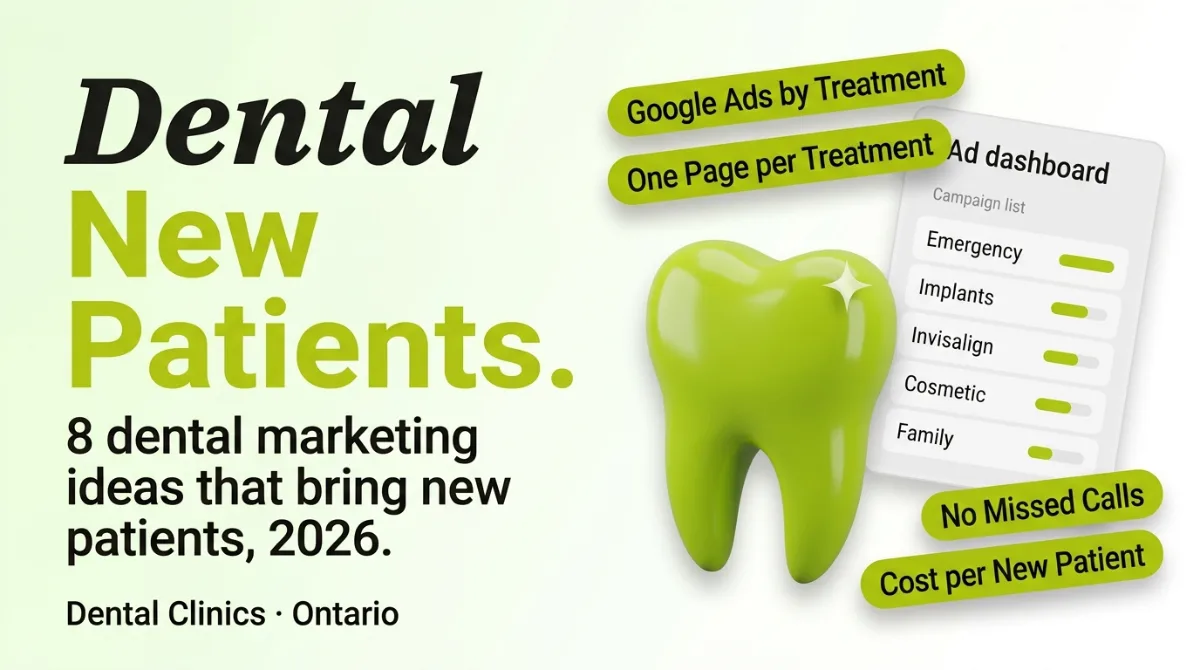
Quick answer: The dental marketing ideas that bring the most new patients are Google Ads organized by treatment, a page for each treatment you advertise, an active Google Business Profile, and a front desk set up so no call is missed. Track cost per new patient by treatment, and keep every ad within your regulator's advertising standards, which in Ontario means the RCDSO.
Many dental clinics spend on marketing that brings clicks but not the patients they want. A broad "dentist near me" campaign fills the phone with price shoppers, while the implant and Invisalign enquiries that keep a practice healthy go to the clinic down the road. These eight ideas are built to fix that.
What dental marketing works best in 2026?
Marketing that matches each patient's need works best. Someone with a toothache, someone researching implants and a parent looking for a family dentist search differently, decide differently and are worth different amounts to your clinic.
| Idea | Brings in | Best channel |
|---|---|---|
| Google Ads by treatment | High-value and urgent patients | Google Search |
| Treatment landing pages | More bookings from the same clicks | Your website |
| Google Business Profile | Local and family patients | Google Maps |
| Call tracking and missed-call follow up | Patients you already paid to reach | Phone |
| Online booking | After-hours bookings | Website and profile |
| Facebook and Instagram ads | Cosmetic and family patients | Social |
| Recall and reactivation | Returning patients | Email and SMS |
1. Run Google Ads by treatment, not one campaign for everything
Separate campaigns for emergency dentistry, implants, Invisalign, cosmetic work and family dentistry let you match each search with the right ad and budget. Emergency searches need to show up fast near the clinic. Implant searches are researched for longer and are worth more. Splitting them means your budget goes to the patients your clinic wants most.
Campaigns organized by treatment
One broad campaign
2. Send each ad to a page about that treatment
An implant ad that lands on your homepage loses most of its patients. A dedicated page that explains the treatment, what to expect, how to book and answers common questions converts far better. It also helps you show up in Google and AI answers for that treatment.
3. Keep your Google Business Profile active
Many family patients choose from the map results. List every service, keep hours accurate, add real photos of your clinic and team, and post regularly. Ask for reviews in a way that follows your regulator's current guidance on patient feedback.
4. Make sure no call goes unanswered
Paying for a new patient enquiry and then missing the call is the most expensive mistake in dental marketing. Use call tracking to see when calls come in and from which ads, set up a callback process for missed calls, and route after-hours calls to voicemail or an answering service that captures the details.
Following up a missed patient call
Without follow up
Incoming call
Phone rings
Missed call
Call missed
Second clinic
Patient chooses another clinic
With call tracking
Incoming call
Phone rings
Missed call
Call missed
Call this patient back
Callback notification
Booked
Appointment booked
5. Let patients book online
Many people search for a dentist in the evening, after work or after the kids are asleep. Online booking for new patient exams and consultations captures those patients instead of hoping they remember to call the next day.
6. Use Facebook and Instagram for cosmetic and family dentistry
Social ads work well for treatments people think about before they search, like whitening, Invisalign or finding a family dentist after a move. Keep claims accurate and check every ad against the advertising standards that apply to your clinic.
7. Bring back patients who have drifted away
Patients overdue for a cleaning are often the easiest to book. Recall reminders and a simple reactivation message to patients who have not visited in a while can fill hygiene schedules without any ad spend.
8. Track cost per new patient by treatment
Know which treatments and ads produce booked new patients, and what each one cost. Connect call tracking, online booking and your intake forms to your ad accounts, review it monthly, and move budget toward what works.
From treatment search to appointment
Invisalign near me
Searches by need
Treatment page
Lands on the treatment page
Booked
Books online or calls
Cost per new patient
Tracked by treatment
What do dental advertising rules mean for your marketing in Ontario?
Ontario dentists must follow the Royal College of Dental Surgeons of Ontario (RCDSO) advertising standards. These standards limit what dental ads can say and show, including claims about results, comparisons with other dentists and the use of patient testimonials and before and after images. Rules change over time, so read the current RCDSO standard yourself, and make sure anyone running your marketing reviews every ad against it. The clinic is responsible for final approval.
Frequently asked questions
How do dental clinics get new patients online?
Run Google Ads organized by treatment, send each ad to a page about that treatment, keep your Google Business Profile active, and make sure every call is answered or returned quickly.
Do Google Ads work for dentists?
Yes, especially for emergency, implant and Invisalign searches. Separate campaigns by treatment and track bookings, not just clicks.
What is the best marketing for a new dental clinic?
Start with a complete Google Business Profile, a simple website with a page per main treatment, online booking, and a small Google Ads budget focused on the treatments you most want to grow.
Can Ontario dentists use patient reviews in ads?
The RCDSO advertising standards restrict how patient testimonials and reviews can be used in advertising. Check the current standard before using any patient feedback in ads or on your website.
Want more of the patients your clinic wants? Dot Design Media runs Google Ads and Facebook campaigns for dental clinics, organized by treatment and tracked to booked appointments. See how our dental marketing works.